
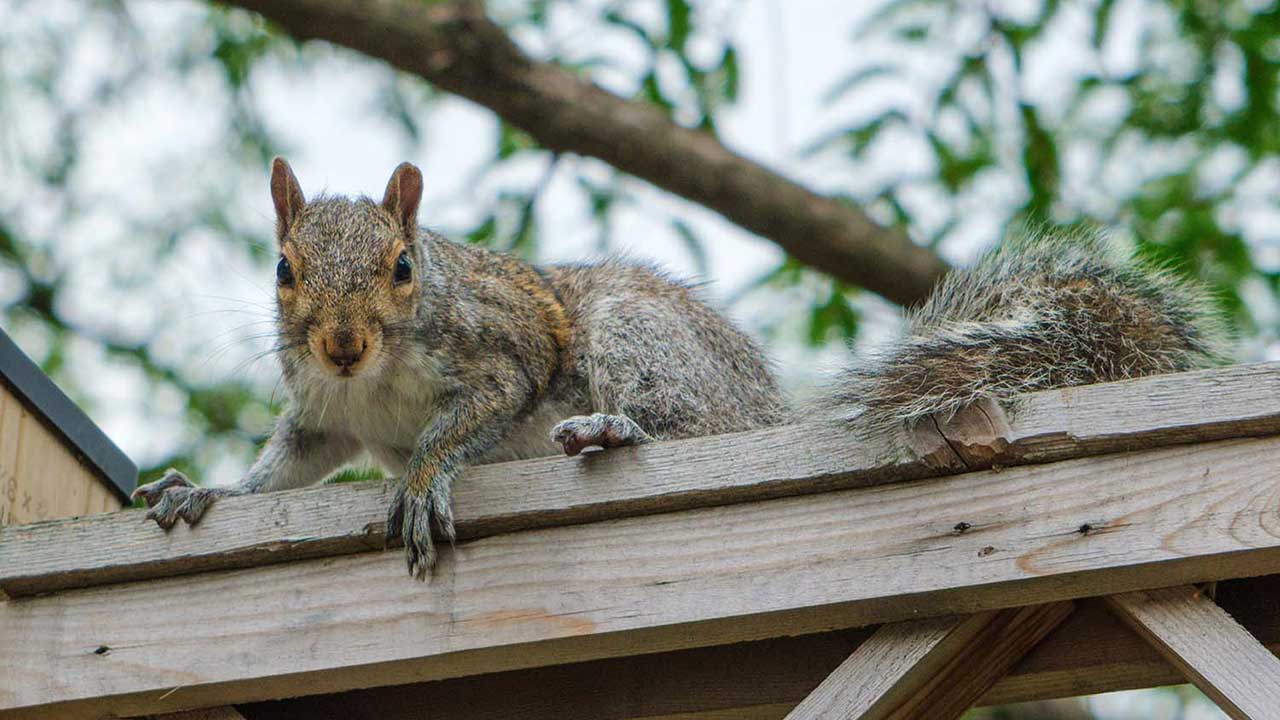
Did you know that Jan. 21 is National Squirrel Appreciation Day? We did.
And we get it. Squirrels are the furry, cute denizens of our backyards, public parks and woodland habitats. But these small, mischievous creatures wreak havoc on utility infrastructure across the nation.
If you’re looking for real-world examples of these usual suspects causing power outages, you don’t have to look far:
- In December 2025, more than 8,300 homes and businesses in Twin Falls, Idaho, lost power when a squirrel entered an electrical substation.
- In November 2025, an enterprising squirrel in Lafayette, Indiana, triggered almost 2,000 outages.
- In October 2025, about 5,000 people in Grand Island, Nebraska, lost power after a squirrel found its way into their main power station.
But why? Do squirrels just have it in for us? Are they particularly malicious? (See: geese.) What is it about squirrels that makes them so damaging to electric infrastructure?
“Firstly, we have a large squirrel population, and they thrive in both rural and urban environments,” said Rick Hamrick, a biologist with the Mississippi Department of Wildlife, Fisheries, and Parks. “They’re also arboreal, and they’re incredibly acrobatic – really good at climbing up poles and into infrastructure and even buildings. Their teeth grow continually, so they need to gnaw to keep their teeth worn down. Put it all together, and it’s easy to see why squirrels and the power grid don’t mix.”
Knowing what we do about squirrels, how can we best defend the grid against this adorable army of determined, inexhaustible critters? It starts with engineering.
“Our job is to protect both reliability and wildlife,” said Philip Ozier, senior manager of engineering. “We improve and update our design standards continuously. Over time, we’ve increased the distance between components that are conductive, so the average squirrel is not large enough to connect that circuit and cause a problem. The newer the installation, typically the more distance between those wires and components.”
In addition, we work to keep critters from accessing critical infrastructure with:
- Flashy, shiny reflectors to deter birds and critters from lines.
- Special squirrel guards outside substations to prevent squirrels from running across overhead lines and reaching critical equipment. Spinning wheels on either side act as jump barriers.
- Bushing caps to protect terminals where wires enter and exit transformers. The bushing caps are polymer and plastic covers and are now standard for most new installations.
- Insulated tape is wrapped around bare wires in locations near other components.
- Fake owls are posted on substation fences. Owls eat snakes and rodents, so they help discourage the animals that we can fool. In some locations, employees even move the owl periodically to reinforce the illusion.
- Vanquish fencing (which is a non-energized barrier) to stop all crawling animals from getting into substations.
- Tree pruning to keep vegetation away from lines.
“While wildlife like snakes, raccoons, birds and squirrels can present challenges to power reliability, we continuously implement mitigation strategies to prevent these types of outages,” said Josh Vance, senior manager of operations and construction. “It’s a 24/7 effort, and it’s definitely a priority for our teams.”
Although industrious squirrels still occasionally find their way past our many defenses, Entergy employees are serious about safeguarding the equipment that serves you. That way, we can all appreciate squirrels – outside of substations.
