
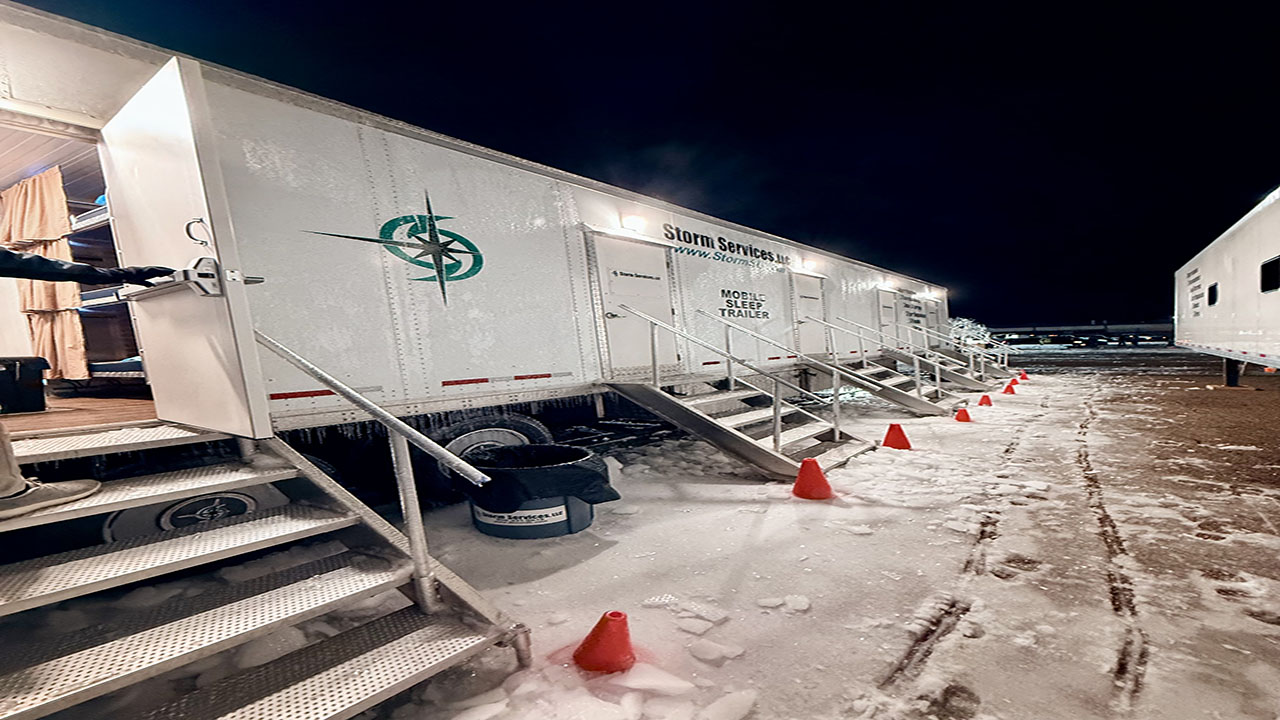
When winter storms swept across the region this January, Entergy faced a challenging restoration effort in historic conditions. Ryder Miller, senior staff HR business partner at Entergy, was deployed to the Ike Hamilton staging site in West Monroe, Louisiana — one of the hardest hit regions of the storm.
Inside the operation: Ryder Miller’s perspective
For Miller, the experience was eye‑opening. While his day‑to‑day role is in HR, his storm role as a lodging specialist brought him to an entirely different side of the business, one that required adaptability and constant problem‑solving.
“One of the most important responsibilities was showing up, being adaptable and jumping in wherever support was needed,” Miller said. “Proactively identifying issues and mitigating them before they escalated was critical. Serving as the liaison between the crews and Storm Services was also a key part of our daily work, ensuring that communication stayed clear and responsive.”
Miller and his team served as liaisons among employees, contractors and third‑party vendors — ensuring thousands of workers had the food, water and lodging needed to stay focused on restoration.
“We were serving almost 9,000 meals a day, including breakfast, lunch and dinner,” he said. “There were some long days, but it was worth it.”
Harsh weather also brought additional challenges. The ice storm pushed temperatures below freezing, strong winds cut through the site and the ground was coated in ice, making it difficult even to walk safely. Despite this, Miller said the lodging accommodations were better than expected and provided a much‑needed place to recharge after long days in the elements.
But the real difficulty came from uncertainty. “Our biggest barrier was navigating the unknowns from day to day,” he said. “We often didn’t know how many crews would arrive each night until they physically reached the staging site, which required us to stay flexible, problem‑solve quickly and be ready to adjust lodging assignments on the spot.”
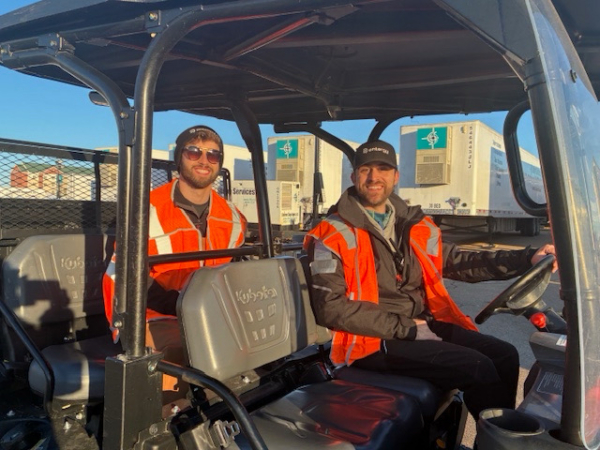
“Pictured from left to right Ryder Miller and Josh Lennie. Both were first time lodging specialists at the Ike Hamilton staging site.”
Long hours also added to the strain. “The first three days were the toughest as we adjusted to 16‑hour shifts and harsh weather,” Miller explained. “Because our role was crew‑facing, most of our communication happened between 5 p.m. and 11 p.m. when crews finished their field work, which made the days feel even longer. By the end of each shift, we were physically and mentally worn out — feet swollen from being on them all day. Our voices were rough from the wind and constant communication, and our eyes heavy from the long hours. Over time, though, we adapted to the pace and routine. And even on the most exhausting days, it was easy to stay motivated because we could clearly see how our work supported restoration efforts and helped customers get power back sooner.”
Despite the challenges, Miller said the experience was rewarding.
“I enjoyed that I was able to interact with employees from across the organization,” he said. “I would encourage everyone to take their storm role seriously and make a positive difference for those around you.”
More than a staging site — a symbol of teamwork
At its peak, the Ike Hamilton site supported approximately 2,300 workers — a scale never before seen in Entergy’s winter storm history. Nearly 200 staging employees from all four states in Entergy’s service territory worked tirelessly to keep operations running, ensuring that our lineworkers, contractors and other teams supporting restoration had the resources needed to fuel their efforts.
The Ike Hamilton staging site wasn’t just a logistical hub; it was a symbol of resilience representing how those across the company come together in times of need for the customers and communities we serve.

