
An independent study found that Amazon pays for the costs to power its data centers—these expenses aren’t added to the bills of local residents or businesses. In some cases, Amazon even pays a surplus that utilities can use to modernize the power grid.
Between 2020 and 2025, the average U.S. residential electricity price jumped 27%. Demand for compute power and data centers also grew. Does that mean data centers are to blame for rising electricity costs?
Kush Patel, senior partner at Energy and Environmental Economics (E3), who has studied power and energy for over 20 years, wanted to find out.
“There’s actually still a very limited amount of research and analysis that underpins all of this,” he said. So he and his team examined four Amazon data centers across the country, analyzing utility bills, rate agreements, and grid data, to determine whether data centers were responsible for rising electric bills.
The answer starts with a problem decades in the making.
The energy grid—an interconnected network of power plants, substations, transformers, and transmission lines that deliver electricity to consumers—is now tasked with powering a completely different world than the one it was built for decades ago.
About 70% of U.S. transmission lines and transformers are over 25 years old, with some dating back to the 1960s. After a post-war construction boom, electricity demand flattened in the early 2000s as energy-efficient technologies took hold. Investment in the grid slowed with it. But now, a new wave of demand, driven by everything from charging your electric vehicle to the lifesaving equipment humming in hospitals, is swelling more than anyone anticipated. As modern life demands more from an aging grid, higher electric bills become less of a possibility and more of a certainty.
Understanding a rate increase starts with understanding how an electric bill actually works. Consider how communities pay for roads: Residents may chip in through taxes, but it gets more complicated when a massive new factory is built and needs its own on-ramp—who pays for that? Electric bills are similar. They are split into variable costs, costs tied to energy prices and how much power you use, and fixed costs, which cover the poles, wires, and infrastructure everyone shares. The more customers contribute to those fixed costs, the smaller each person’s share.
The grid in Mississippi, for example, is older than most of the people using it. Older equipment means more outages, hard-to-find replacement parts, and less flexibility for modern energy loads. Infrastructure costs are also climbing—transformer prices alone have risen 60 to 80% since 2020, and lead times can take up to four years.
Haley Fisackerly, president and CEO of Entergy Mississippi, said customers were most likely going to see their electric bills rise in order to upgrade the grid unless there was investment and growth.
Kush’s research found that one of our data centers in Mississippi paid for the grid expansion it required. Amazon became a bigger customer, meaning everyone else’s share of the existing costs shrunk. “We were able to prove quantitatively that the [Amazon] data center had not been subsidized by other customers,” Kush said. “They’re paying their fair share.”
What’s more, Mississippi residents’ bills are expected to drop 16% compared to what they would have paid without the data center—a decrease at a time when rates elsewhere are climbing.
Kush and his team discovered similar findings at the other three Amazon data centers in their study. As E3 researcher Liz Mettetal explained, “Data centers can have beneficial impacts on other customers.” Every region is different, and outcomes depend on transparent collaboration between utilities, communities, and data center operators.
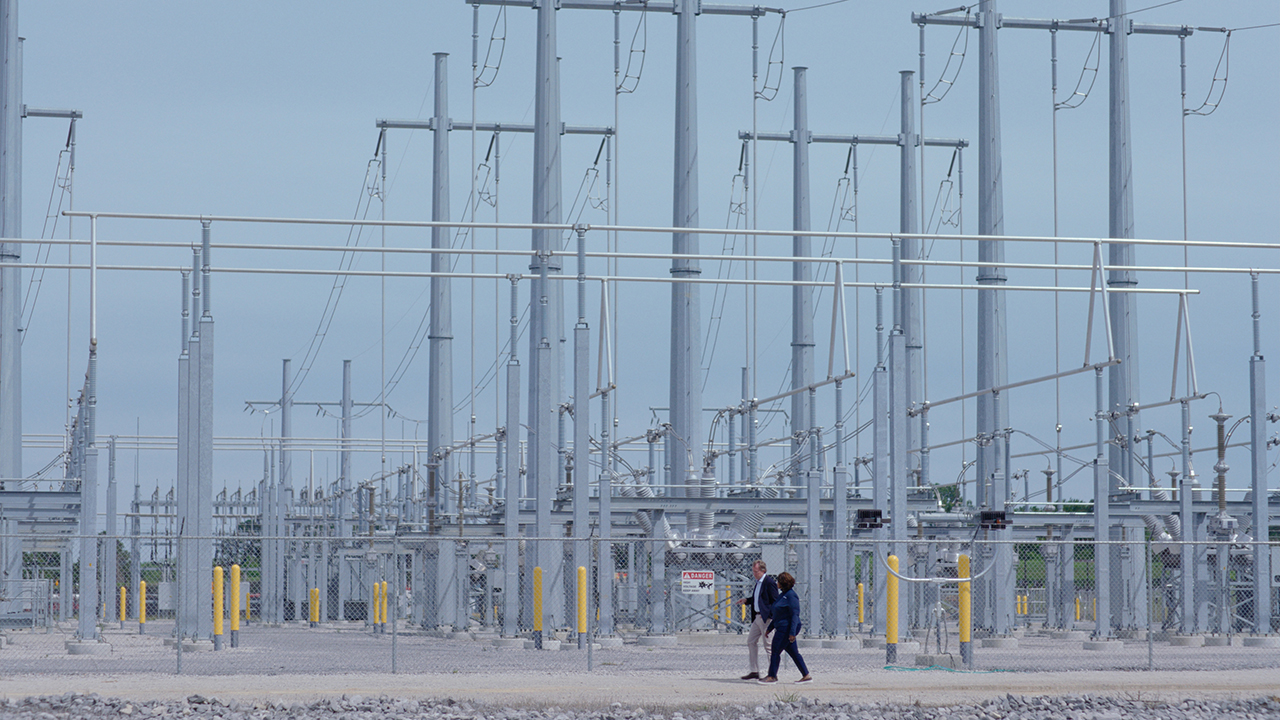
With Amazon’s $25 billion planned investment in Mississippi, electric company Entergy Mississippi is now moving forward with its largest grid upgrade to date, called Superpower Mississippi, which aims to improve reliability without increasing monthly electric bills for local residents.
Kamisha Quates, vice president of reliability, Entergy Mississippi, says the investment has been transformative for the state’s grid.
“As a part of Superpower Mississippi, we have used three tenants, which are more power, better power at a lower cost. We have announced and are already making about $300 million of additional reliability improvements that have been enabled by the partnership with Amazon.”
Learn more about the AWS approach to energy and community impact from Amazon Web Services’ head of sustainability.
The original version of this post appeared on the About Amazon blog.

