How we trim trees
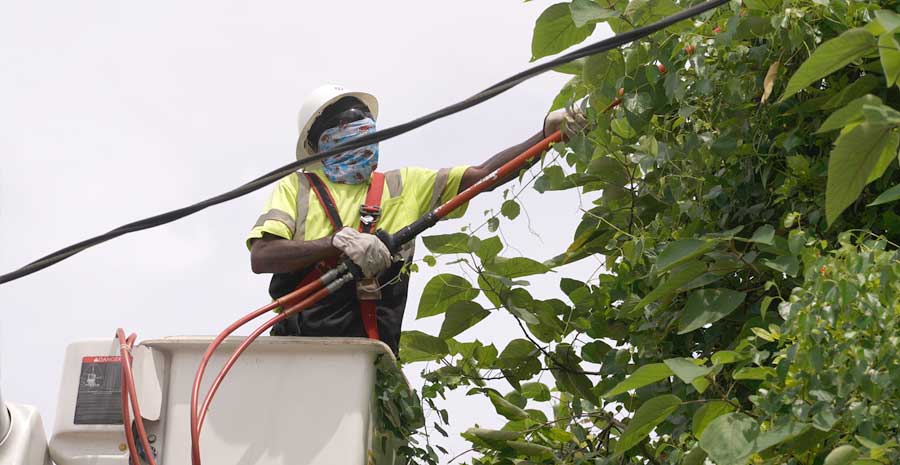
The process
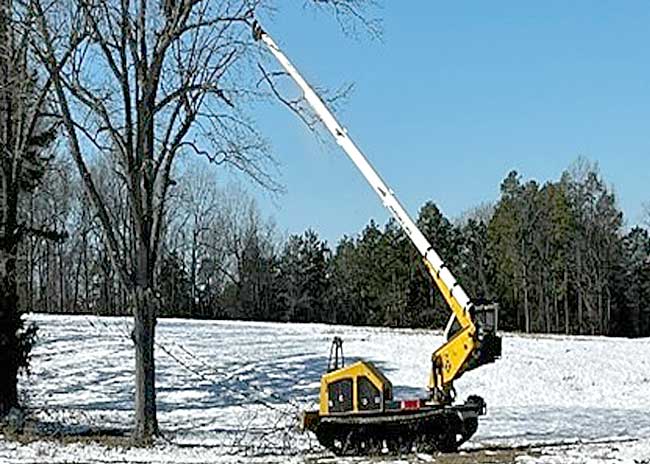
In rural areas, a machine called a jaraff is used most often. This machine cuts limbs as an operator drives along distribution lines. In some areas, these limbs will be left to decompose on-site. In maintained areas, like pastures and landscaped yards, the brush may be mulched or picked up.
In many areas, crews can use herbicide to maintain vegetation. Herbicide provides the best long-term results. Learn more about our herbicide program here.
We do not pick up debris from storm damage, customer requested trims, or hazard trees cut inside or outside of the right-of-way. For routine cycle trimming, the brush/debris generated from the trimming will be chipped, mowed or mulched if it is located within landscaped and/or maintained areas as the work is completed. Brush/debris generated from trimming work located in unmaintained areas will be left on-site (as is) to decompose naturally.
The timeline for debris removal/mulching/mowing may vary depending on the location. In residential neighborhoods/yards it is our goal to do this on the same day as the trimming work. If not, the contractor is expected to notify the customer (in person or via door hanger) that they will return the following day to complete the cleanup. In rural, maintained areas the debris removal/mowing/mulching from mechanical trimming may take longer and will be completed following the work.
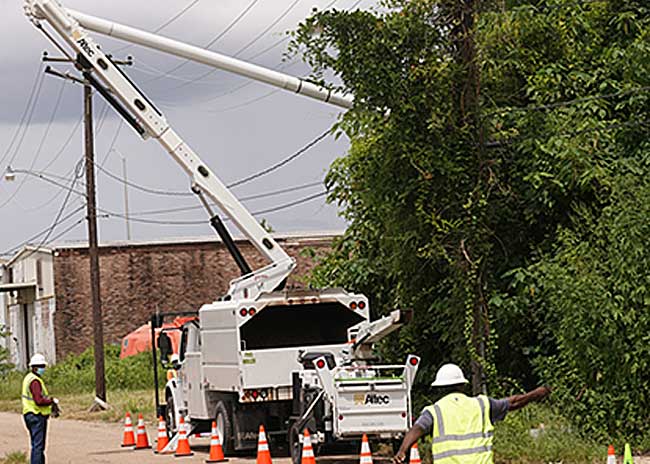
In urban areas, bucket trucks will most often arrive first. A crew will trim the trees away from lines and equipment. Brush is then stacked for pickup. The crew will move on to the next location, and another crew will come to pick up the brush. In some cases, this will occur on the same day. In other cases, the brush must be left overnight, and crews will leave a door hanger to let you know they will return to clear the brush.
The techniques
The goal of our vegetation management program is to maintain vegetation so that it does not interfere with the delivery of power. This means trimming vegetation enough so that the tree or brush will not grow into the line during the next cycle (or period of time between trimming). We trim to modern arboricultural standards as it pertains to utility vegetation management and do our best to preserve the health of the vegetation. There are times when a tree may be better suited for cutting down than trimming. Often, directional pruning techniques are used to encourage the tree to grow away from the line. See below for some examples.
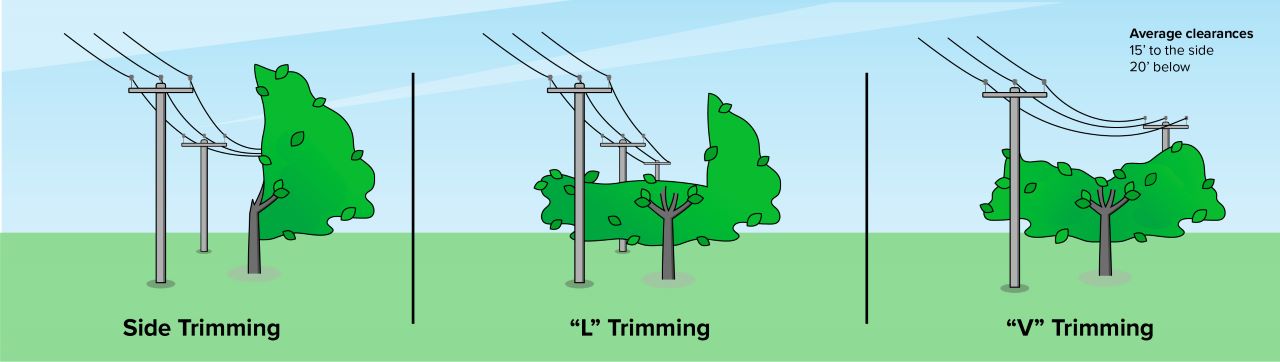
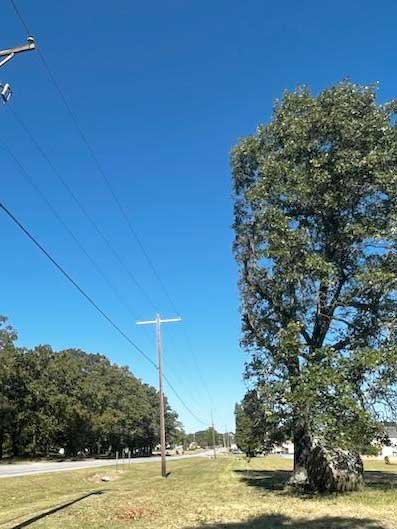
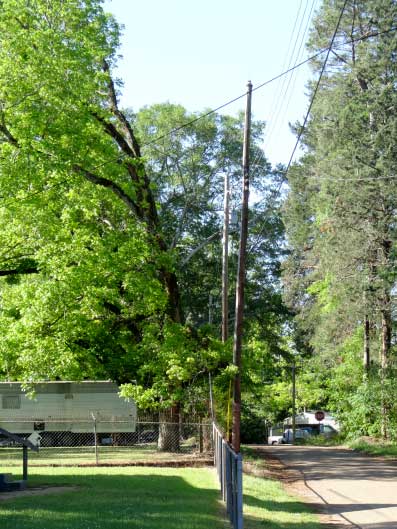
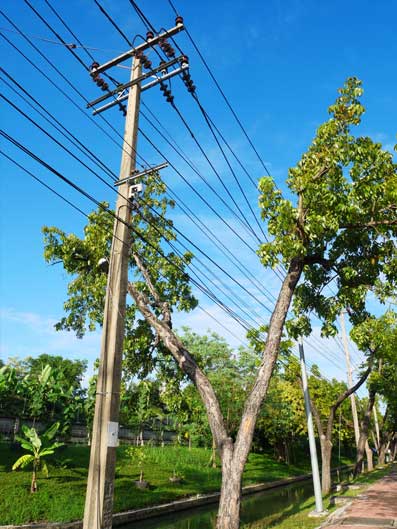
When a customer reports a concern:
A ticket is created for the concern to be inspected. This ticket has a 10-working-day commitment, which means someone will inspect it within 10 working days.
If the concern does not require trimming, you will be contacted via phone call or door hanger. If the concern needs to be trimmed it will be handled within 10 days. We will not remove debris from customer requested trims.
What we trim:
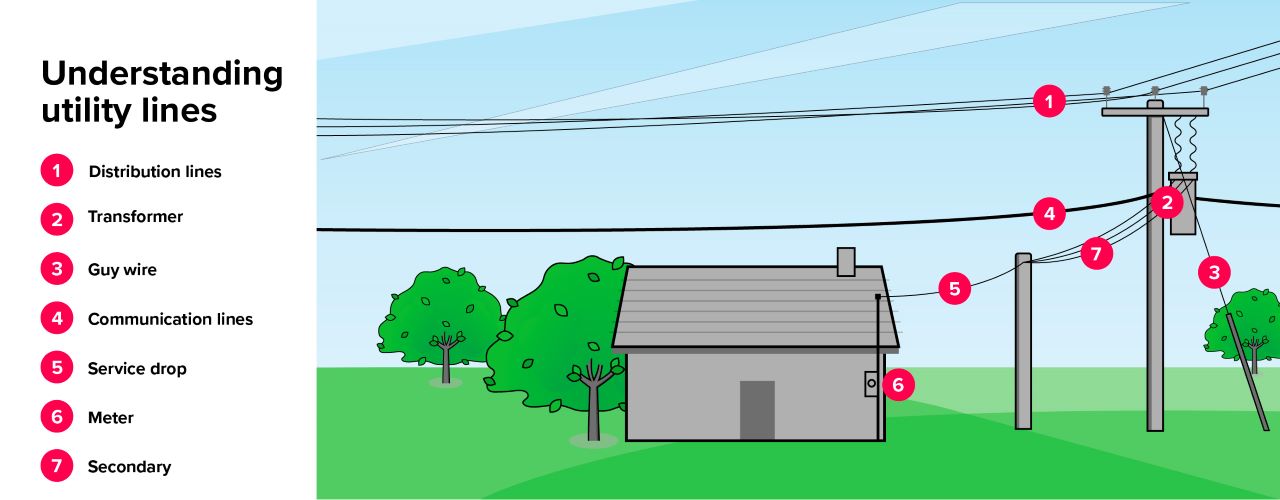
We DO trim around energized lines and to maintain our equipment.
- It is not safe for you or private contractors to work near energized lines. Entergy’s trained tree service professionals clear vegetation around lines, poles and equipment. We DO NOT trim service lines.
- The service line is the line that goes from your house to the first pole. This is the responsibility of the property owner. We can have this line temporarily disconnected so that you or your contractor can remove any trees/limbs, as needed.
- We DO NOT trim trees/plants that are blocking lights.
- Trees identified to pose risk inside or outside of the right-of-way may be cut down. Debris is not cleaned up.