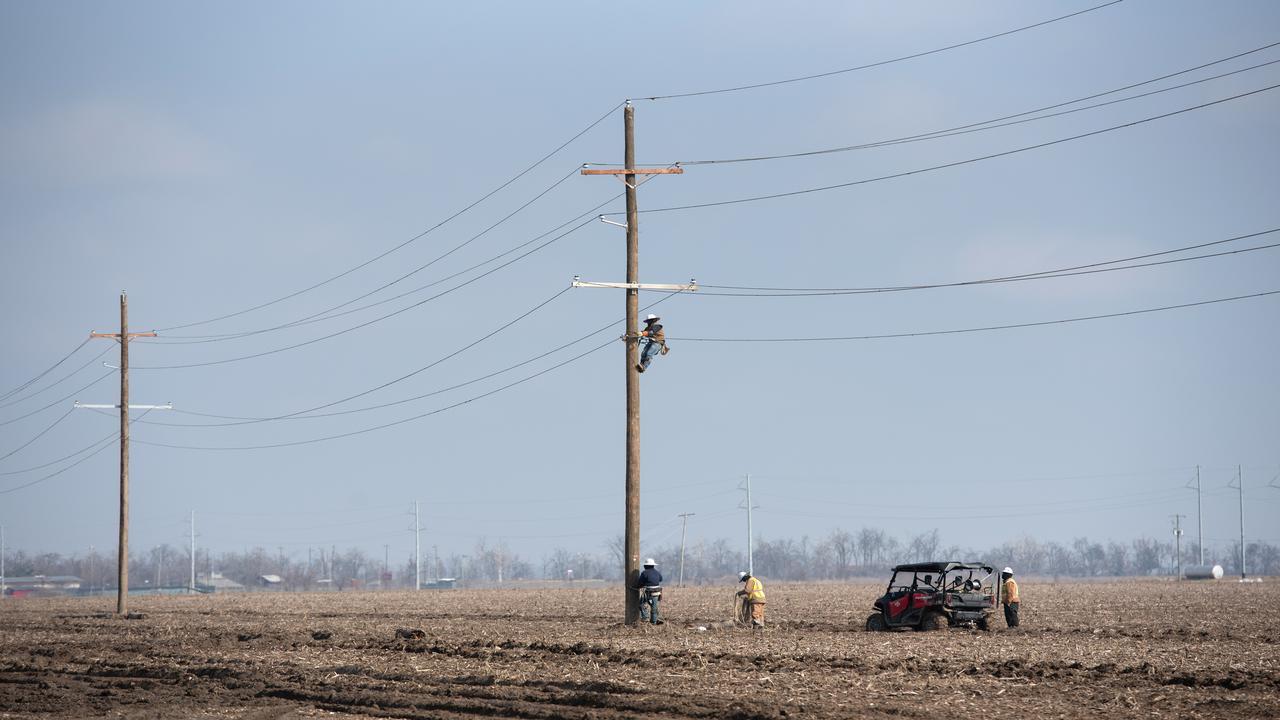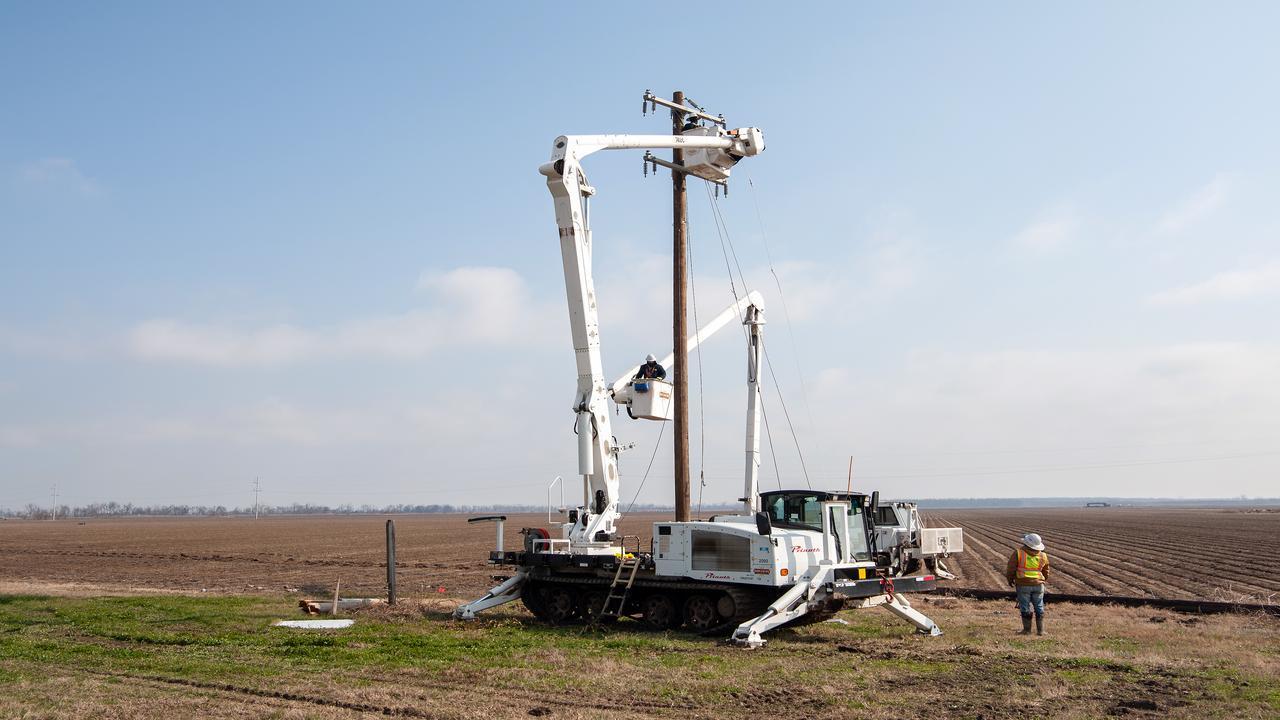
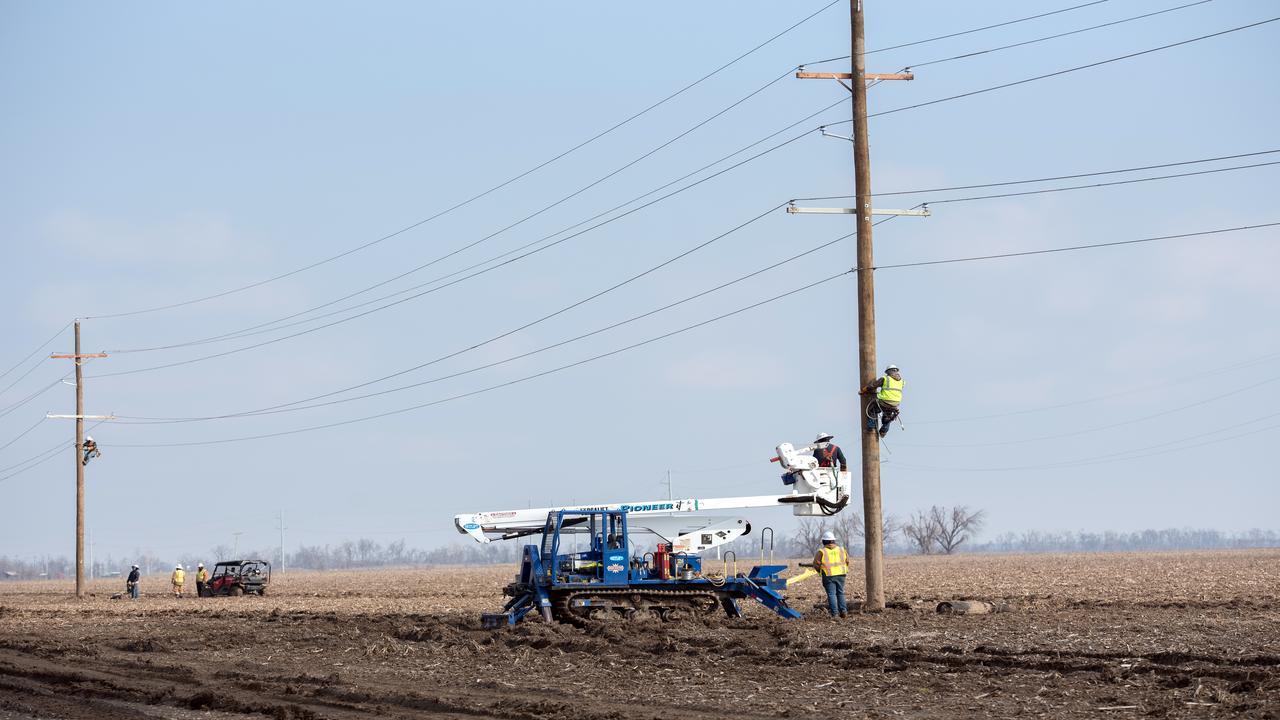
A lineman manually climbs a pole in a field near Rolling Fork to make repairs.
When storm damage extends beyond the pavement, some restoration work requires getting a little mud on the tires.
Many distribution and transmission lines run through rural and secluded portions of the state, creating unique terrain and access challenges for repairs. But the Entergy Mississippi team is up for the off-road challenge.
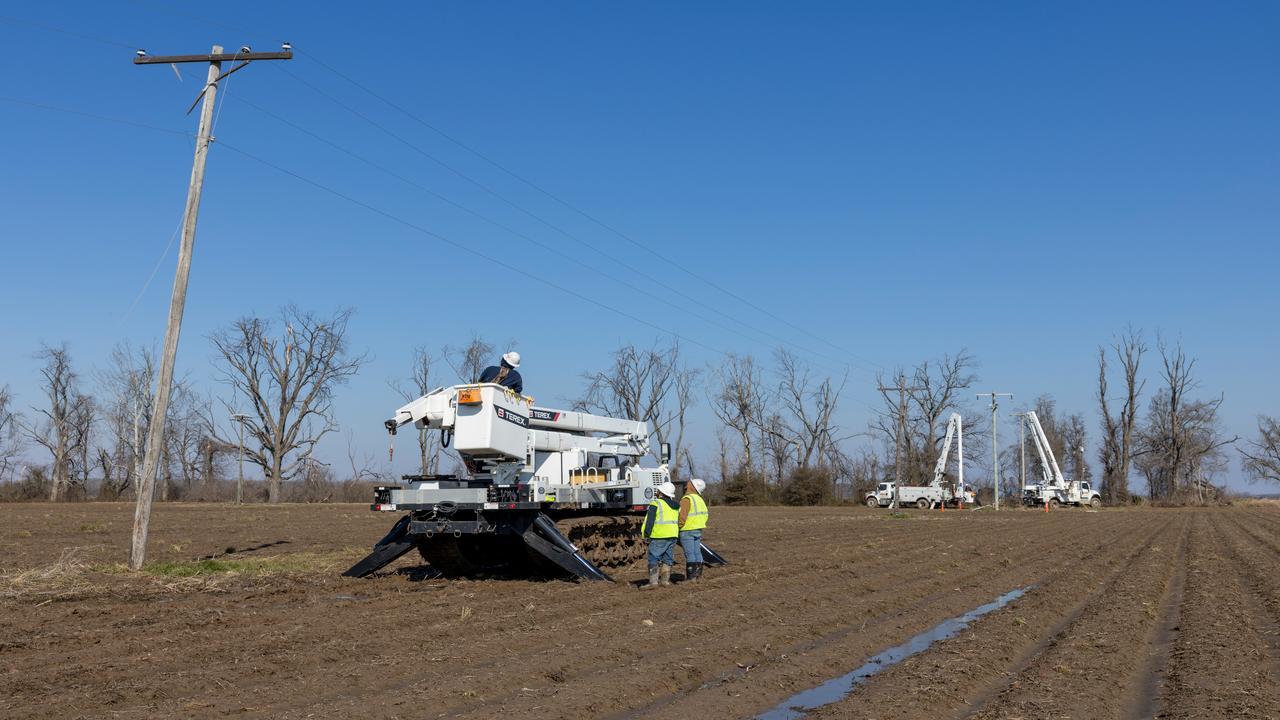
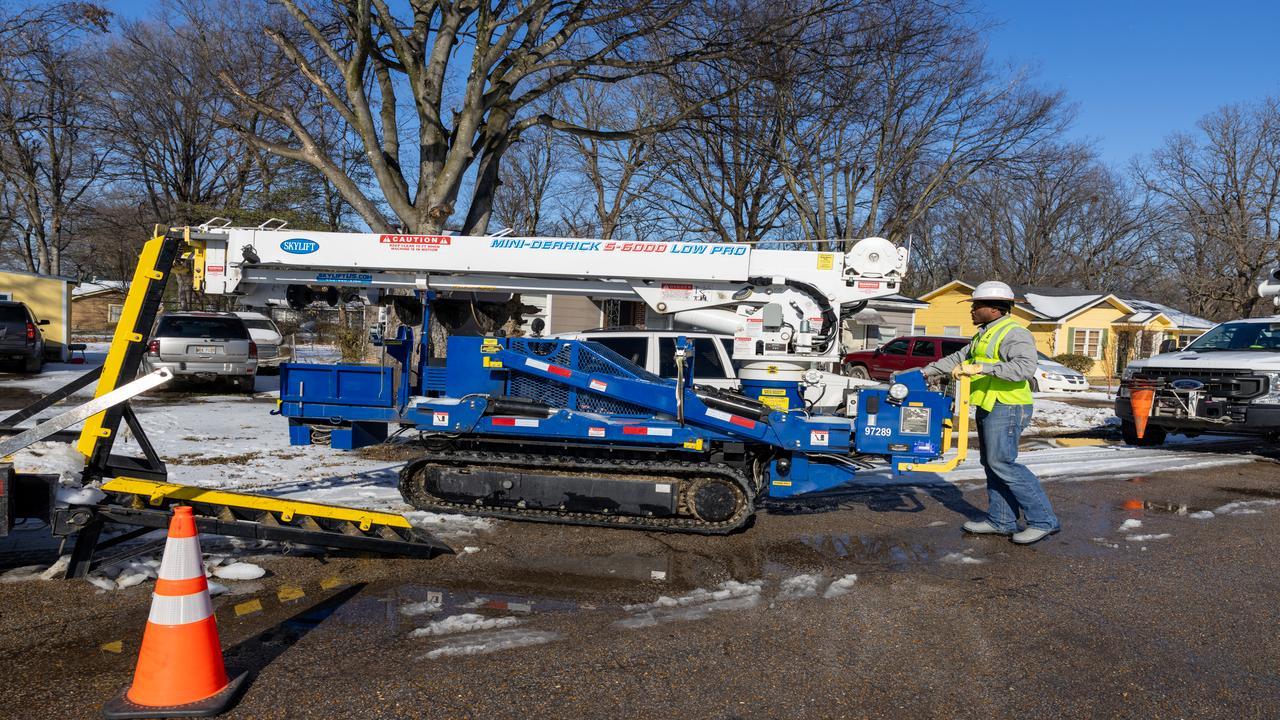
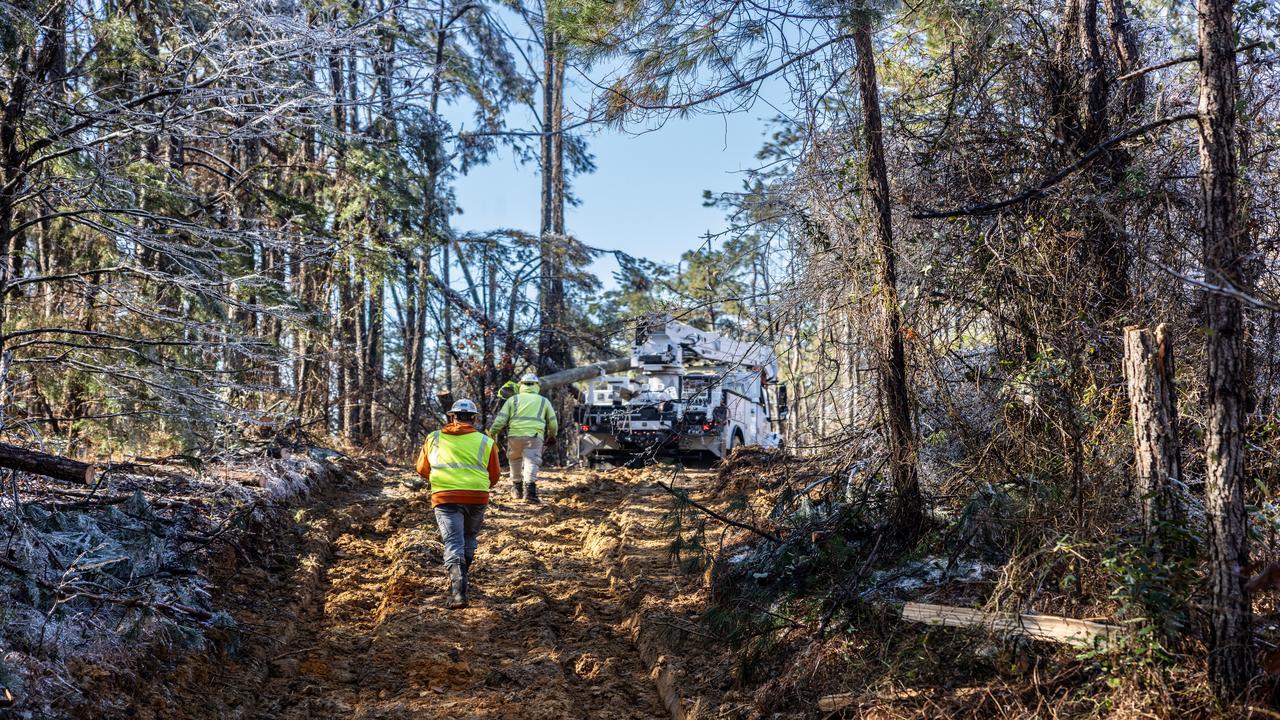
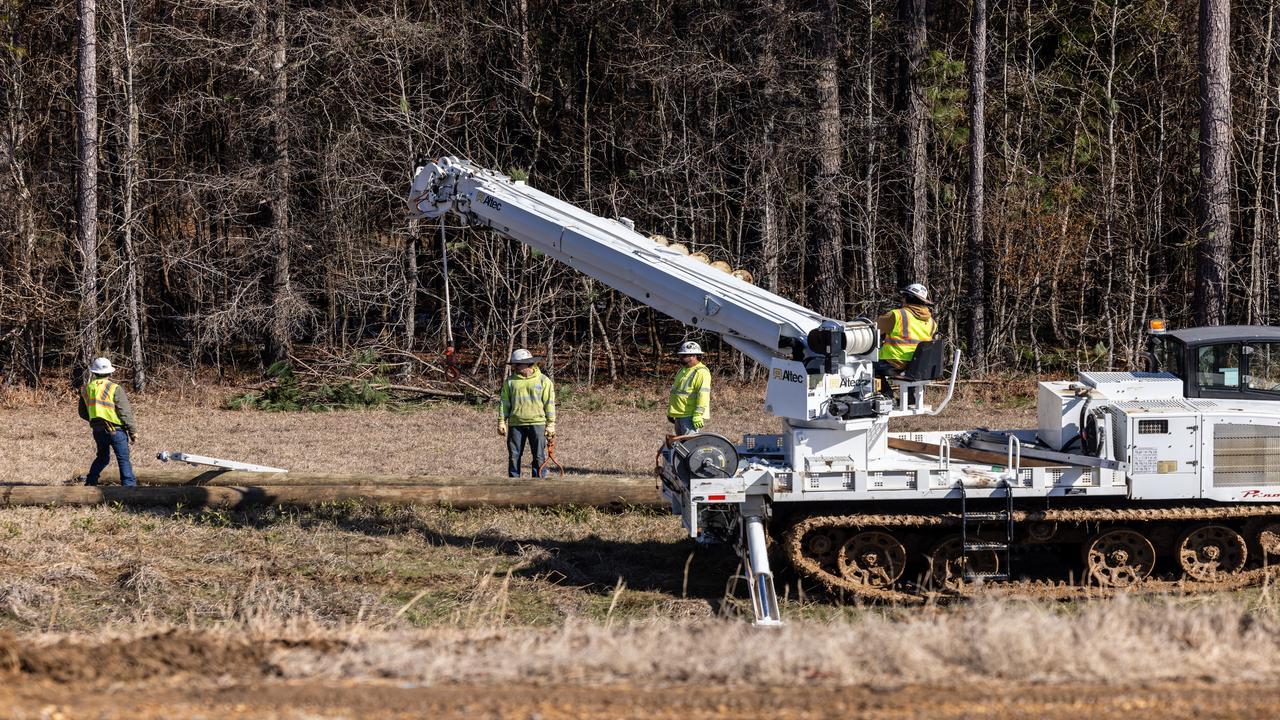
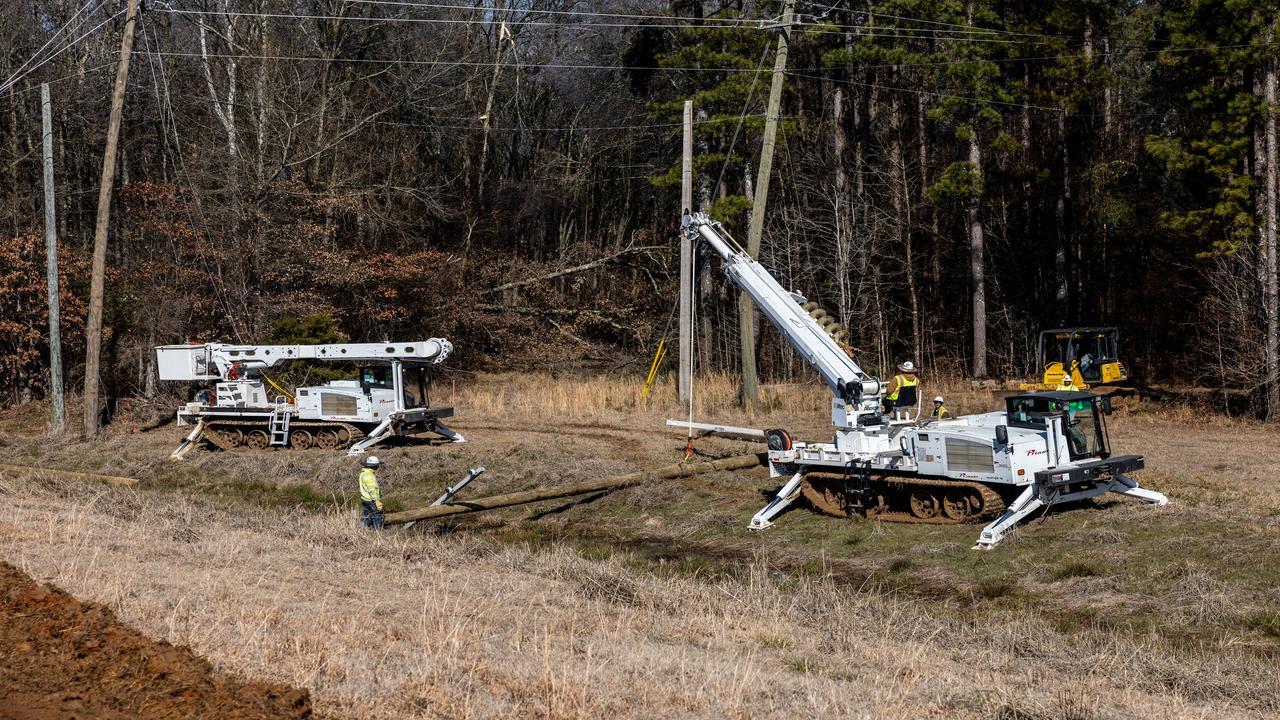
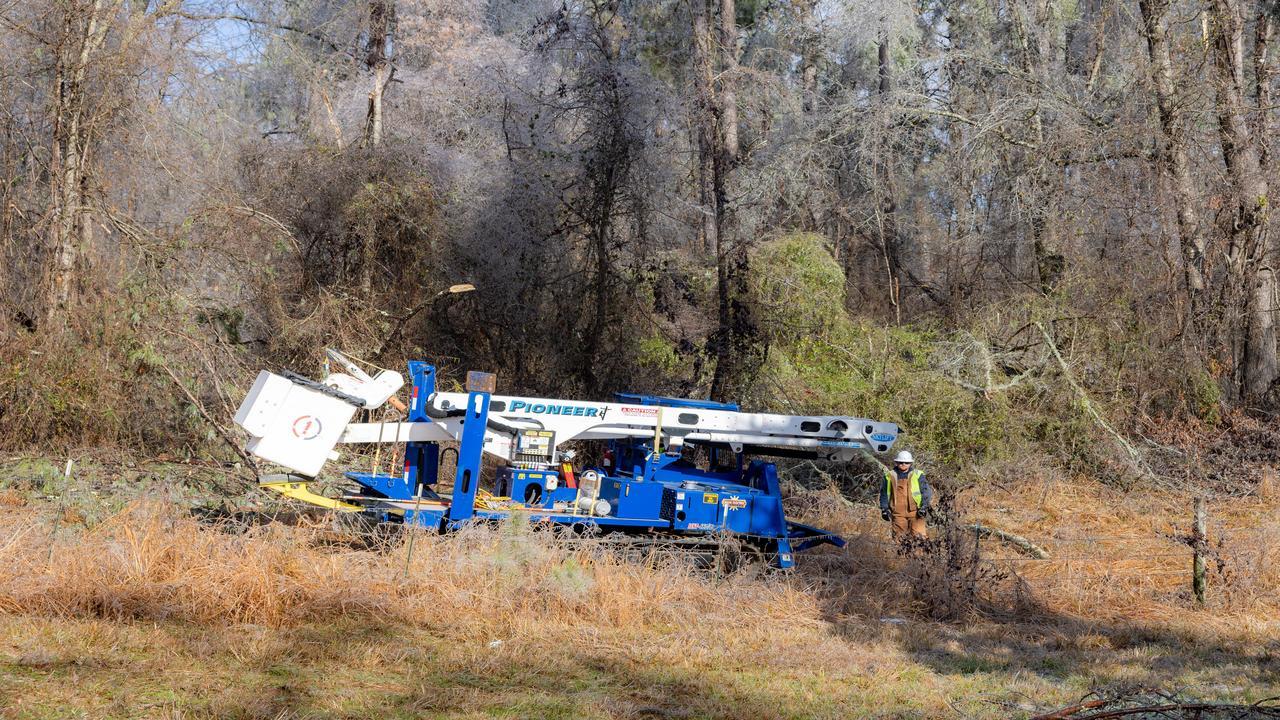
A typical bucket truck is equipped to handle many off-road scenarios and is still the go-to equipment for most repairs. When terrain is too challenging or unsafe for a bucket truck—due to trees, close-quarter obstacles or extensive mud or ice—crews can utilize several other pieces of equipment to help restore power to all our customers, no matter how far off the beaten path they must go.
“We will use tracked aerial units, tracked digger derricks, backyard buggies, bulldozers and excavators,” said Jay Luckey, construction manager for Entergy Mississippi, serving as a resource section chief during the storm response. “Sometimes there is no equipment access, and we do everything manually with climbing equipment and rigging methods to set poles.”
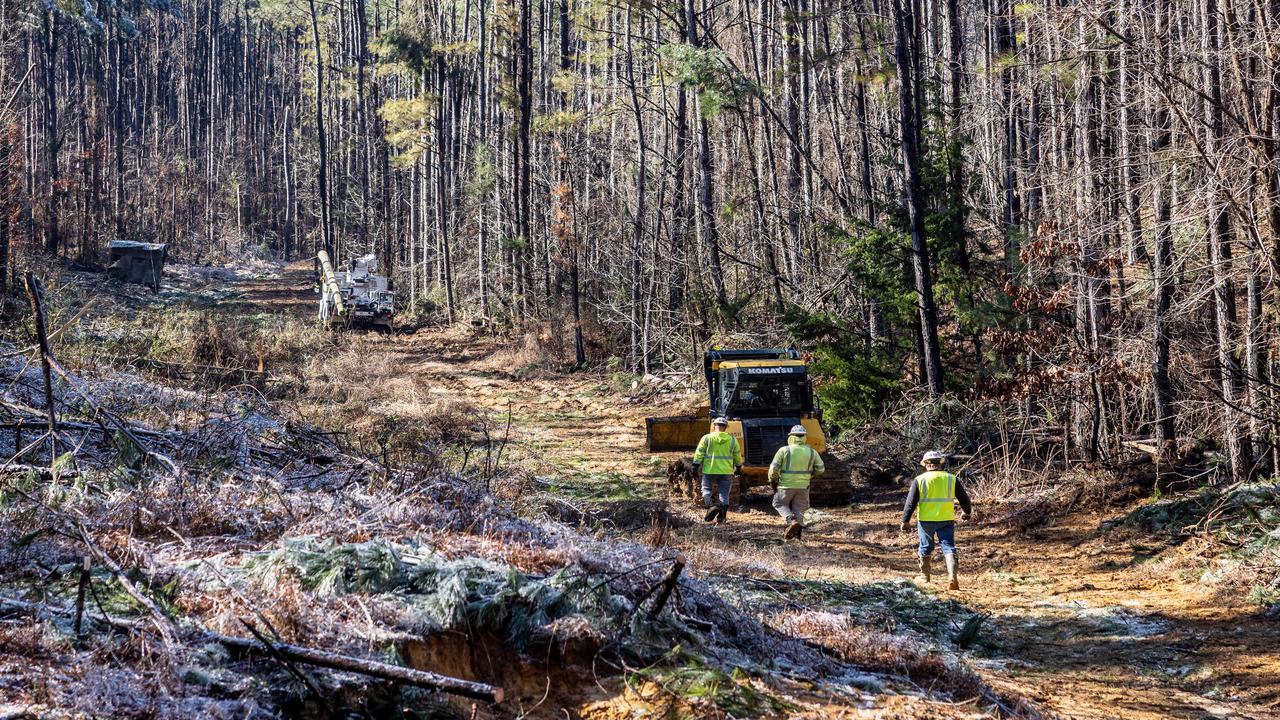
All challenges are not created equal. Our service area covers everything from low-lying flatlands to hardwood-covered hills. In the Delta, the melted ice has caused severely muddy conditions for lines built in crop fields. In Grenada and surrounding areas, the terrain is heavily wooded and hilly creating access challenges to lines running cross-country. These lines often run for miles with very limited points of access and after the storm many have required excavators or bulldozers to clear pathways for the other equipment to travel through.
On a typical blue-sky day, it takes a four-to-five-member crew approximately three hours to replace a pole.
“The addition of challenging terrain can add several hours to a pole replacement,” said Luckey.
Thankfully, we have amassed an army of workers to repair or replace all the equipment damaged in the storm, including power poles. Approximately 2,800 restoration workers have been engaged to restore service for customers across our service area, including company employees, mutual assistance and contract resources brought on specifically to assist in restoration, and consists of lineworkers, damage assessors and vegetation management crews. As restoration continues, we reallocate resources necessary to support crews already working in harder-hit communities to restore power as safely and quickly as possible.
“Sometimes it requires more time and effort to restore power,” said Luckey. “But our crews are working hard to safely return power to every customer as soon as possible, no matter the challenge.”