
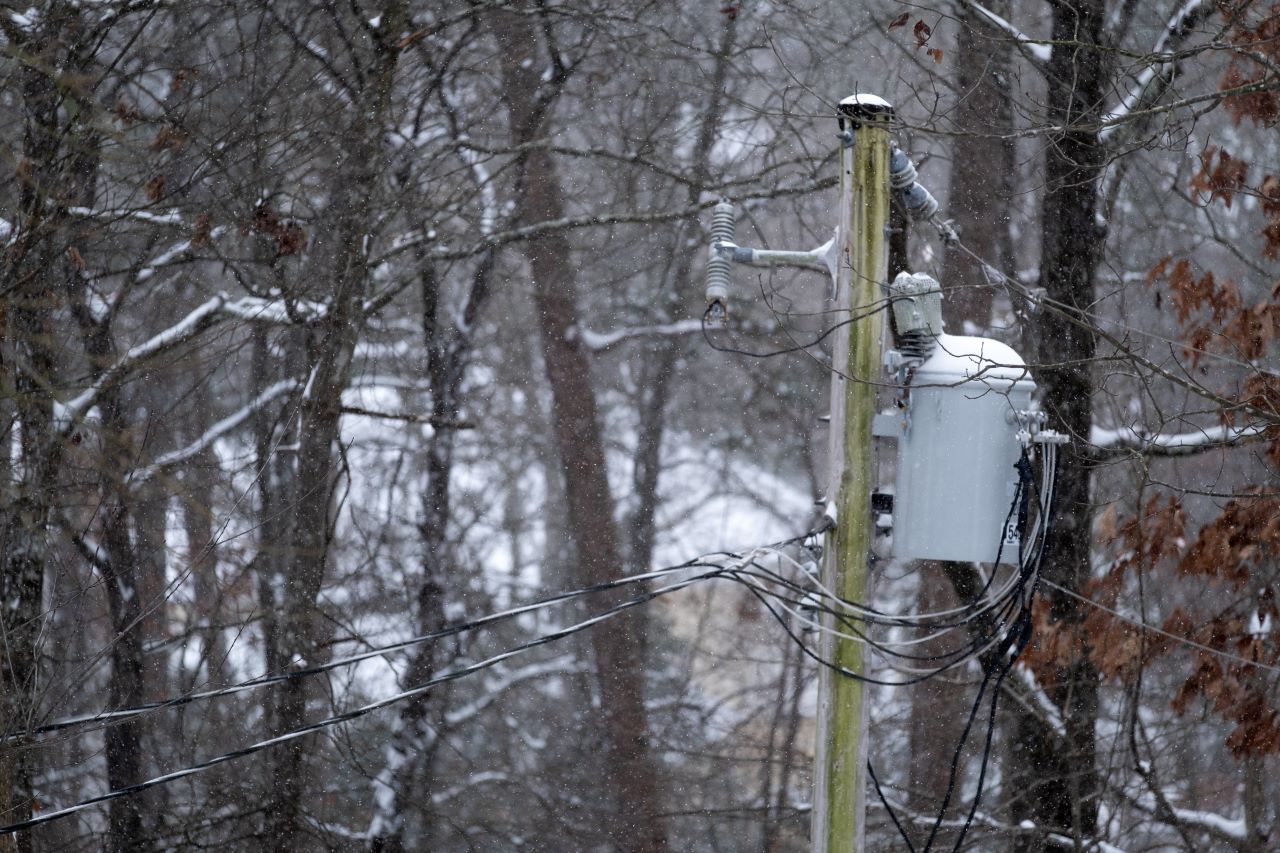
A winter weather event is on the way. Now is the time for Entergy and our customers to complete last-minute preparations. We are prepared, and we want you to be prepared too.
- Our workforce is ready to respond to outages due to winter weather forecasted to affect parts of our service area in Arkansas, Louisiana, Mississippi and Texas. We encourage you to finalize your preparations. For preparation and safety information, visit the Entergy Storm Center website.
- Extremely cold weather across our region is expected to drive increased energy usage over the next few days. Entergy continues to closely monitor the weather, our equipment and grid conditions. We are taking appropriate steps to ensure reliable delivery of power to our customers.
- The impact of ice storms is very difficult to predict, but forecasts indicate the approaching weather system could bring a mix of ice, snow and freezing rain in Arkansas, Mississippi and Texas, while Louisiana is more likely to experience extremely cold temperatures along with freezing rain and sleet beginning Friday evening.
- If outages occur, we ask for patience, as restoration may take longer due to icy conditions that can delay crews from safely getting to work.
- In anticipation of extreme cold temperatures extending into early next week, disconnections for non-payment have been suspended for all customers through Monday, Jan. 26, at this time. We will continue to monitor the situation as it develops.
- We’ve learned from winter weather events in the past and have taken measures in advance to ensure we are winter-ready.
- Predicting outages caused by winter storms is challenging. Areas of freezing temperatures and precipitation can vary widely, with just a few degrees of difference between what’s predicted and what actually happens.
- We model anticipated damage and are working through our checklists, have opened local command centers, are stocking up on needed materials, readying our trucks for driving on snow and ice, organizing the manpower, and arranging for food and lodging for the crews.
- Safety is our core value and always comes first. Then, restoring power is the top priority and first order of business. We assemble and organize the workforce needed to restore service safely and quickly to all customers.
Storm preparations are performed 365 days a year.
- Entergy continually reviews its data and processes and has identified ways to be more prepared for prolonged freezes.
- Our power plants have customized plans to support fleetwide winter preparedness efforts that take place well in advance of a storm, including:
- Insulating critical equipment using improved methods and materials to protect them from lower temperatures.
- Insulating all piping, with the potential for standing water during normal operation, to prevent freezing.
- Designing and building permanent windbreaks or enclosures to protect pumps and other critical equipment.
- Exploring the use of wireless instrument line monitoring systems to check temperatures of critical equipment.
- Other efforts to prepare and maintain critical systems and infrastructure across the grid in advance of colder temperatures included:
- Inspecting and testing equipment that can be impacted by extreme cold such as gas-filled circuit breakers.
- Ensuring the readiness of assets that provide electric service to critical gas infrastructure and other points of delivery that are vital to support generation reliability and resiliency.
- Inspecting and maintaining substations and transmission lines that are critical to Bulk Electric System reliability.
The impact of ice storms is very difficult to predict, and ice is particularly harmful to electrical lines.
- Freezing rain and snow can be very unpredictable, and location matters greatly. During freezing rain events, variations in rainfall amounts can result in severe damage in one area while nearby areas are only slightly affected.
- Freezing rain sticks to power lines in a very small temperature range (2 or 3 degrees, just below freezing).
- Ice is particularly harmful to electrical lines:
- Ice can increase the weight of branches by 30 times.
- At 1/8 inch of freezing rain accumulation, small limbs and lines become coated and can cause isolated outages by breaking the weakest limbs that are overhanging services and lines.
- At 1/4 inch of freezing rain accumulation, more limbs and lines become coated, causing similar, but somewhat more widespread outages to the distribution system. Younger evergreen trees will start to become so heavy that they may lean into the distribution lines, causing more outages.
- A 1/2″ accumulation on power lines can add 500 pounds of extra weight. A large percentage of deciduous tree limbs will break and the tops of evergreen trees may break out, falling on distribution lines. On longer spans, the weight of ice on the conductors may be enough to break the lines without limbs falling on them. Crossarms may break and pole tops may break out as limbs hit the lines attached to them. Poles supporting large power equipment (i.e transformers, regulators) may be more susceptible to breakage.
- At 3/4” of freezing rain accumulation, almost all deciduous tree limbs will break and the tops of evergreen trees will break out, falling on distribution lines. On medium and longer spans, the weight of ice on the conductors will be enough to break the lines without limbs falling on them. Many crossarms will break and pole tops will frequently break out as limbs hit the lines attached to them. Many transformers will fall with these pole tops.
- At 1” of freezing rain accumulation and above, substantial devastation of the overhead distribution system will occur. The transmission system will start having significant trouble as well.
- Galloping lines are a rare occurrence:
- When cold, icy weather strikes, our transmission lines can experience galloping, which is the slow, “skipping rope” motion of power lines.
- Galloping occurs when rain freezes to the power lines, and then steady winds cause adjacent lines to move and sometimes contact one another. This can cause an outage.
- Some compare this phenomenon to an airplane, where the ice freezes to the wire, creating a wing-type effect and making the lines move up and down. Wind blows across the conductor, which creates lift. With the right conditions, this will cause the lines to gallop.
- Minor galloping generally has no negative effect, but moderate galloping can cause adjacent conductors to contact and cause a fault. If severe enough the conductor can cause serious structural damage.
- While we can’t prevent lines from galloping, there are a number of ways our engineers try to prevent the impact of galloping lines. This includes controlling the tension in the conductor during the initial installation and installing dampers at certain locations on the line. Selecting the damper location is normally done using software that considers conductor size, span lengths and tension.
Cold weather restoration is handled differently.
- We use a methodical and calculated process in bringing customers back online after an outage in very cold weather, regardless of whether the initial cause of the outage was specifically weather-related.
- Rather than simply energizing an entire power line all at once, we must bring customers back online one section at a time to avoid damaging our system and making the situation worse.
- During cold temperature extremes, customers tend to use a lot of electricity to keep heating or other devices running. Electric heaters often run continuously, creating a constant power demand.
- When power is disrupted during winter, many customers leave their heating systems and appliances turned on, creating too much energy demand all at once when service is restored.
- We have devices that protect our system during normal, day-to-day operations and power demand. During weather extremes, we must change our processes to protect our system and restore power to ensure our customers’ safety and reliability.
- Restoring all customers on the same power line simultaneously can create large, instantaneous power demands. The instant demand could be higher than the built-in protective devices on a line were designed to handle.
- During extreme cold weather conditions, these specific restoration challenges are experienced not just by Entergy, but throughout the industry and the country.
- Customers without power can help by turning off major appliances but leaving on a lamp or other light to indicate when power is restored. Then, gradually turn other appliances on to spread out the increase in power usage over a longer time.
- Cold load pickup is the phenomenon that takes place when a distribution circuit is re-energized following an extended outage of that circuit.
- It is referred to as cold load pickup because the power supply has been unavailable for a period of time, so the load has reached a “cold” state before being re-energized.
- Protective relay device settings have been adjusted ahead of the cold weather moving into the service territory to help account for cold load pickup conditions should an outage occur.
- Engineering teams will monitor equipment and adjust protective relay settings throughout the cold weather event in response to the cold weather.
- If an outage should occur, customers can assist by turning off or unplugging their electric appliances during the outage so that they don’t all restart immediately as power is restored.
Our crews are prepared to work long hours after the storm has passed, restoring service to customers as safely and as quickly as possible.
- We are actively securing restoration workers ready to restore service for customers.
- The company may call on restoration workers from around the country if needed to aid in restoring power safely and quickly for our customers. However, given the large footprint of the storm across the region, securing these additional assets may prove more difficult than normal.
- We bring in resources in advance of bad weather to avoid travel risk as much as possible.
- Our crews and damage assessment teams are staged close to their home locations to respond quickly when conditions are safe. If their local networks are not affected, they will be re-assigned to those that need help.
- To support the safety of our workforce and avoid fatigue, individuals should not work more than 16 hours in a 24-hour period and should never work more than 13 days in a row without a 24-hour rest period. This allows our restoration crews to get adequate rest and safely restore power when working.
- Our logistics team is acquiring hotel rooms and preparing to set up staging sites in the affected areas to house the crews working to restore service for our customers.
We restore power as quickly as it is safe to do so.
- Each storm is unique, but our history with storm restoration guides us in predicting the amount of damage to expect and the time needed for restoration.
- We use weather forecasts and computer models based on knowledge from past storms to predict an estimated number of customers without power and the number of days needed to restore power.
- As we know, severe winter weather can cause extended outage restoration times. While the majority of customers may be restored quicker, some of the hardest hit areas could take longer dependent on the extent of damage to Entergy’s electrical facilities and road conditions in the area.
- We begin restoring power to customers as safely and quickly as possible after the storm has passed, and the restoration process is done in an orderly, deliberate manner. This starts with assessing the damage and then repairing power plants, transmission lines and substations and then the poles and wires in your neighborhood.
- Right after the storm has passed, and when it’s safe to do so, crews assess damage to electric equipment and facilities to determine what corrective actions and repairs are needed so we can deploy the right personnel with the right material to make repairs.
- Even after a winter storm moves out of the area, extended cold temperatures and icy conditions can delay damage assessments until crews can safely reach the impacted areas.
- In harder to reach areas, we use advanced technology such as infrared cameras, drones and satellite imagery to assess damage by foot, vehicles, airboats and helicopters.
- Restoration where possible happens in parallel, for example, by initially closing circuit breakers and rerouting power.
- First, we restore power plants, as they are the primary sources of power production for all customers.
- Large transmission lines are then repaired and restored. These high-voltage lines, which are often strung on high steel towers, deliver power to cities, towns and major industrial facilities and serve large numbers of customers.
- Next, substations are brought online. Local substations must be functioning for energy to reach the power lines on your street.
- Finally, we move on to remove the poles and wires you see in your neighborhood.
- For safety of our crews, we cannot use our bucket trucks until sustained winds are less than 30 mph.
- Line and vegetation crews may be the most visible part of the restoration, but many other employees behind the scenes provide the support needed to keep the restoration moving – from the start until the last light is on.
- The order in which we bring back on customers is also deliberate. We start with essential services, move on to large neighborhoods and then to individual homes.
- Power is first restored to critical community infrastructure and essential services such as hospitals, water treatment plants, police and fire stations, and communication systems.
- Next, we restore lines serving large areas of customers, and then we restore neighborhoods. This returns power to the largest number of customers in the shortest amount of time.
- Some homes and businesses take longer, as individual customer homes or businesses with damage are often the most time-consuming repairs.
Customers should prepare before weather threatens their area.
- Make your last-minute preparations.
- We ask customers to minimize energy usage as much as possible until the extremely cold weather passes.
- Keep warm, not hot. Lower your thermostat to 68 degrees. When possible, wear additional layers of clothing.
- Unplug electronic devices and turn off lights that are not in use.
- If you can, take advantage of Mother Nature. If it’s cold, open blinds, drapes and curtains when the sun is shining to let in warmth.
- Hold off on doing chores. Delay laundry, washing dishes and other non-essential uses of electricity.
- Wash clothes with cold water, shower quickly instead of taking a bath, cook foods at the lowest possible setting and refrain from opening the oven door while baking.
- Last minute preparations for your home.
- Insulate pipes with insulation or newspapers and plastic. Allow faucets to drip a little during cold weather to avoid freezing.
- Keep fire extinguishers on hand and make sure everyone in your house knows how to use them.
- Take care with alternate heating sources. During colder months, house fires pose an additional risk, as more people turn to alternate heating sources without taking necessary safety precautions.
- Learn how to shut off water valves in case a pipe bursts.
- Have a licensed contractor check the structural capacity of the roof to sustain unusually heavy weight caused from the accumulation of snow or water.
- Make a plan, make a kit. Be prepared before the winter weather threatens our area.
- Experts agree that having a family emergency plan and a kit of the basic supplies needed in an emergency is the best way to be prepared for severe weather.
- A kit of basic emergency supplies and a first aid kit are easy to assemble and are smart ways to prepare for severe weather.
- Remember to check the expiration dates on supplies regularly and replace the expired items.
Customers should stay connected with us throughout the winter storm.
- As you make your own plans, we will keep you informed throughout our response.
- We send storm and restoration updates by email, text or phone call to customers who are signed up to receive notifications from us.
- Download our free app for your smartphone at entergy.com/app.
- Sign up ahead of a storm: myEntergy.com or text REG to 36778.
- Customers should have their account number and ZIP code handy.
- The registration pattern is as follows including spaces: REG (account number) (ZIP code).
- Notifications will only be sent to the contact information supplied and selected by our customers.
- Visit our Storm Center, a one-stop website for information on storm safety, preparation, restoration and regular updates specific to the storm. You can also access the View Outage map from here.
- Storm-related updates are also shared on social media.
- Our View Outage map provides outage status and estimated restoration information to customers across the company’s service area.
- The map offers several viewing options, including a street map, imagery and topographic, with the ability to overlay weather conditions.
- Alert message boxes support the area view map with additional damage assessment and restoration information.
- Red and green lines and icons indicate specific outages on the company’s distribution system and the number of customers affected. Generally, green lines indicate that the line segment is energized, or power is flowing. Red lines indicate that that line segment is de-energized, or no power is flowing.
- It’s important to note that while the main line may be energized (displaying as a green line), the map doesn’t show power flow all the way to the customer’s property. There could be damage or other issues between the energized line and the home such as transformers, downed wires from the pole to the home, or damage with the meter or within the location itself.
- During major storm events significant activity is taking place in the field to restore power as safely and as quickly as possible. Workers in the field provide restoration information back to the office, and that information must be updated in the underlying systems that supply data to the outage map. Because these steps take time, and the environment is dynamic, the outage map at times during a major storm event may not reflect the most current outage and restoration information.
- For more information on the View Outage Map, visit entergy.com/viewoutages or call us at 1-800-9OUTAGE (1-800-968-8243).
- Follow updates in your local news media, like radio, television and newspapers.
Our View Outage map may provide additional winter weather information for customers
- Before a major winter storm is predicted, the View Outage map can display projected ice and snow impact and predicted damage, if activated. The online map displays near real-time weather impact with weather data updated every 30 minutes.
- Damage predictions are only estimates. After a storm passes, we conduct damage assessments to provide more specific restoration times.
- While the majority of customers may be restored quicker, some of the hardest hit areas and/or restoration work that brings additional complexities may take longer, for example, road conditions or access difficulty that requires special equipment, working in marshland or repairing lines over bodies of water.
- The pink and blue color bands indicate the potential impact of an impending winter storm. Clicking on any of the bands or a specific address within a band will provide a pop-up window with 1) observed and forecasted weather, 2) damage predictions and 3) estimated restoration, if available.
- For illustrative purposes only, details in the pop-up window will include:
- Forecast icing: < .25 in
- Observed snowfall: < 1 inch
- Observed wind speed: 0-5 mph
- Forecast wind speed: 0-16 mph
- Predicted damage: Risk of slight to moderate damage to poles, wire and other electrical equipment.
- Estimated restoration time: At least one week (as available)
| Storm Event | Category | Zone Color | Predicted Damage |
| Ice (includes freezing rain) | Slight | Light Pink | Risk of slight to moderate damage to poles, wire and other electrical equipment |
| Moderate | Pink | Risk of moderate to significant damage to poles, wire and other electrical equipment | |
| High | Dark Pink | Risk of significant damage to poles, wire and other electrical equipment | |
| Snow (includes sleet) | Slight | Light Blue | Risk of slight to moderate damage to poles, wire and other electrical equipment |
| Moderate | Blue | Risk of moderate to significant damage to poles, wire and other electrical equipment | |
| High | Dark Blue | Risk of significant damage to poles, wire and other electrical equipment |
Customers should be prepared to report their outages.
- Customers may download our app for iPhone or Android and use it to report an outage or check if power is restored on their street. To download the free app, access your app store or visit: entergy.com/app.
- You can also sign up to receive our notifications and enable two-way texting. Once registered (instructions above), text OUT to 36778 to report an outage.
- Customers can report an outage on our website, by visiting the myEntergy You can first log into your online account or submit as a guest.
- Customers may experience delays when calling our telephone centers when severe weather strikes. We encourage them to use the other quick and easy options available to report an outage, but they may call us at 1-800-9OUTAGE (1-800-968-8243).
We’re here to help
- We are committed to delivering affordable, safe power to the communities we serve and helping customers manage their electric usage to generate savings on their bill. For customers struggling to pay their bill, we offer payment arrangements and flexible payment options to help them pay their energy bill. Customers are encouraged to visit entergy.com for additional resources. They can also reach out to us to manage their account online at myEntergy or by calling 1-800-ENTERGY (1-800-368-3749) for assistance.
Customers should stay aware and stay safe.
- Customers can learn more about storm safety on the company’s Storm Center website, for example:
- Get prepared: Make a plan, make a kit.
- Your mobile phone: A lifeline during a disaster.
- Stay informed: Stay storm ready.
- Stay safe: Safety after the storm.
- Generator safety: Know the hazards.
- Food safety: Avoid loss and risk of illness.
- Extreme cold: Keep an eye out for others.
- Several online resources are available to help you stay safe during severe winter weather.
- Hypothermia (abnormally low body temperature) and frostbite are both dangerous conditions that can happen when a person is exposed to extremely cold temperatures. More information on recognizing and preventing these conditions is available from the Centers for Disease Control and Prevention.
- Protect yourself and your loved ones during a winter storm, especially by safely heating and lighting your home, operating a generator safely, and ensuring the warmth of babies and older adults.
- Protect your home and car during a winter storm.
- How to survive a power outage in winter – information from AccuWeather.com on how to stay warm and reduce risk.
- Information from ready.gov – dangers of winter weather, what to do if under a winter storm warning and how to stay safe when winter weather threatens.

