
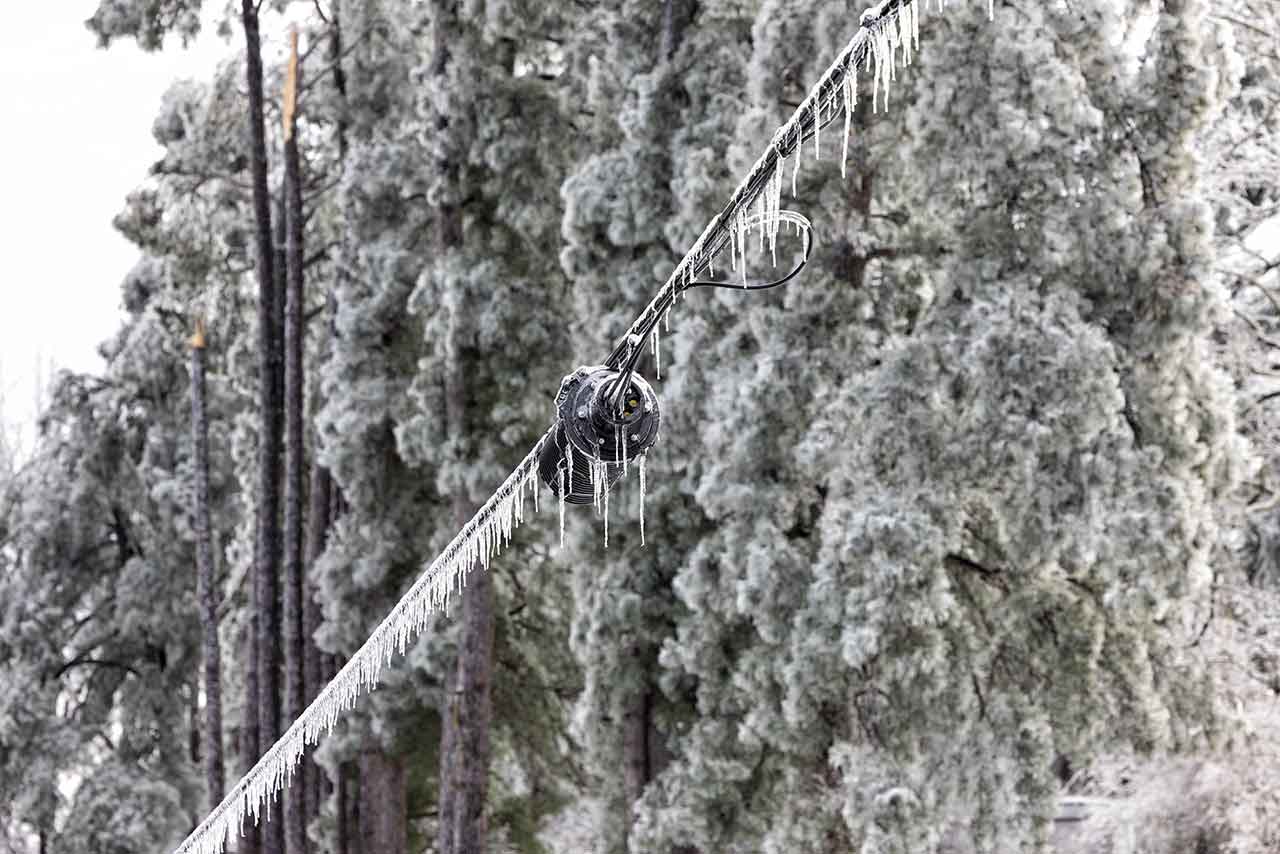
When a massive winter weather event hits an area more familiar with tropical temperatures, thunderstorms and tornadoes, the impacts are often hard to fathom. The recent storm that swept through Entergy’s service territory – disrupting electrical service for approximately 171,200 Entergy customers – brought with it significant ice accumulation and extreme challenges that have slowed our restoration efforts.
According to preliminary reports from the National Weather Service, the hardest-hit corridor — from Richland Parish through East Carroll Parish in Louisiana and into Sharkey, Issaquena, Holmes, Leflore, Carroll, and Grenada counties in Mississippi — experienced up to one inch of ice accumulation. This heavy ice caused severe tree damage and structural impacts, creating widespread debris and blocking access routes, making it difficult for crews to reach affected areas.
Ice storm damage is often hidden, and much of the damage cannot be fully identified until ice melts and temperatures rise. While warming conditions support restoration progress, they also expose the full extent of the damage for the first time, including weakened trees, compromised poles and stressed power lines that may fail after initial repairs.
 Restoration crews continue to make progress, but conditions remain dangerous and unpredictable as ice-related hazards persist and new risks emerge daily. Lingering ice continues to threaten both workers and the public, even as weather conditions improve.
In addition to ice accumulation, crews are working in extreme cold, with wind chills creating a heightened risk of hypothermia, frostbite and other cold-related injuries. Lineworkers are spending long hours outdoors, handling metal equipment, climbing poles and performing precision work that cannot be rushed without compromising safety.
Derek Mayo, one of the many linemen on the front lines of the restoration efforts, weighed in on the harsh conditions, citing this as the worst ice storm many of the crew have ever seen. “Just something simple like turning a wrench takes 10-times longer than it normally would,” Mayo said. “Everything is just ice cold; your fingers are so numb you can barely move, and your feet feel like they’re stuck in blocks.”
“You just can’t imagine what it looks like unless you’re out here,” he said of the harsh conditions. “You’re in the air and all around you can hear ice breaking and branches snapping. This job is dangerous enough, now there’s this whole other element and a whole new set of overhead hazards we have to keep in mind as we’re working.”
To better understand what Mayo and our crews are facing, it helps to understand the impacts of ice accumulation.
- A 1/8 inch of ice accumulation can cause small limbs and lines to become coated and may cause outages due to breaking limbs hanging over power lines.
- A 1/4 inch of ice accumulation can worsen conditions. Younger evergreen trees will start to become so heavy that they may lean onto distribution lines, causing more outages.
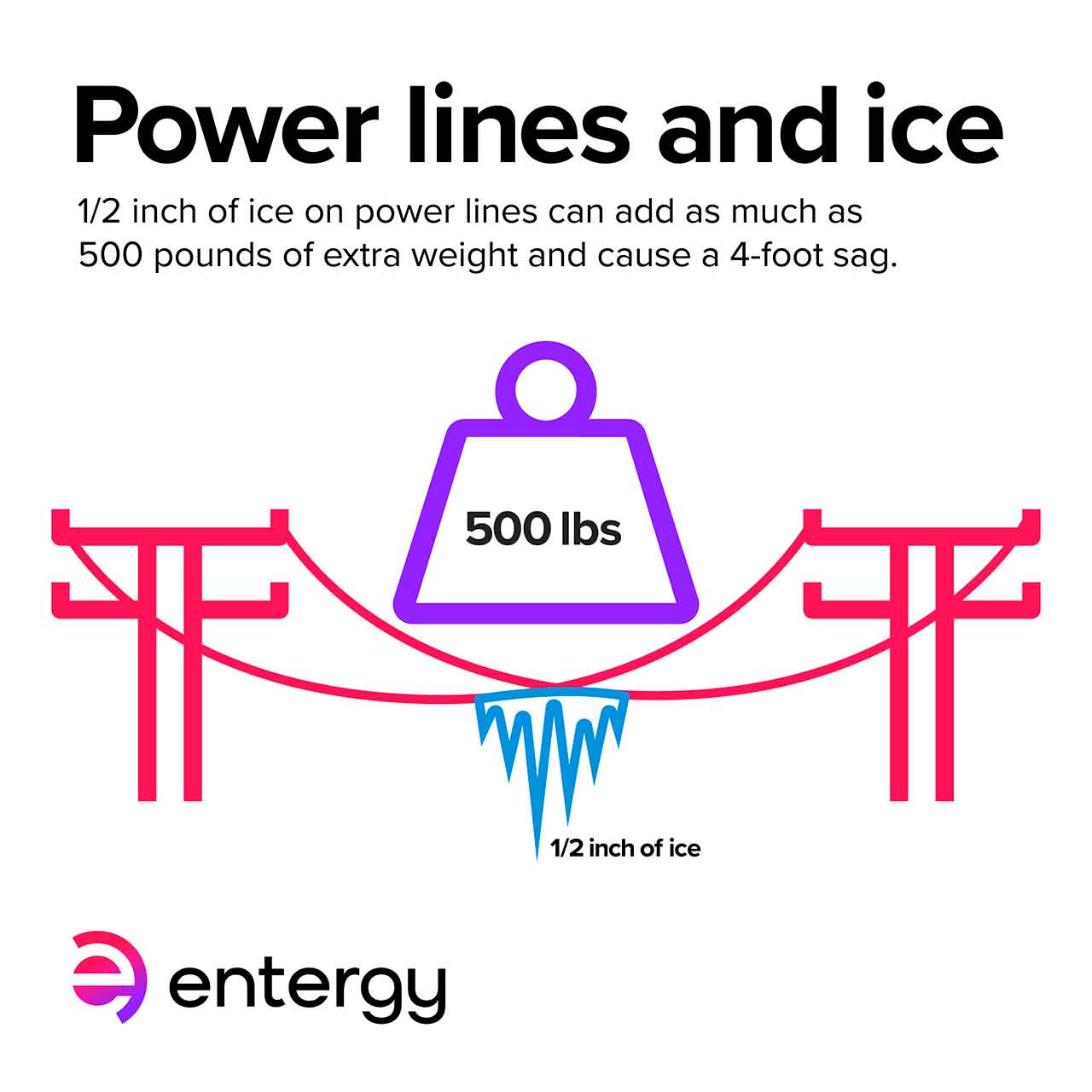
- A 1/2 inch of ice accumulation on power lines can add 500 pounds of extra weight resulting in extended outages.
- One inch of freezing rain accumulation and above creates substantial devastation of the overhead distribution system. This severity of ice accumulation can also cause significant tree damage and long power outages.
The recent storm also brought significant sleet accumulation in Arkansas and Northwest Mississippi, which led to structural collapses, including carports, sheds and gas station awnings. The region experienced extreme cold conditions, with temperatures dropping as low as 11°F at Bluff Lake and ranging from 12 – 15°F across much of Mississippi and Louisiana.
Conditions have led to new and repeated outages. In some cases, crews may temporarily restore power to an area only to uncover additional damage that was not initially visible. When this happens, power must be turned off again so crews can safely complete further repairs. In other situations, temporary repairs are made to restore service as quickly as possible, followed by brief outages later to complete permanent, long-term repairs.
In one area of Louisiana, crews were required to restore power five separate times as additional damage was uncovered during repairs. Situations like this can extend restoration timelines and lengthen workdays, while still requiring crews to follow mandatory rest periods that are critical for worker safety.
As of Jan. 29 at 6:30 a.m., approximately 96,240 customers (56%) impacted by this storm have been restored, and ongoing restoration efforts through the weekend remain focused on the hardest hit areas.

